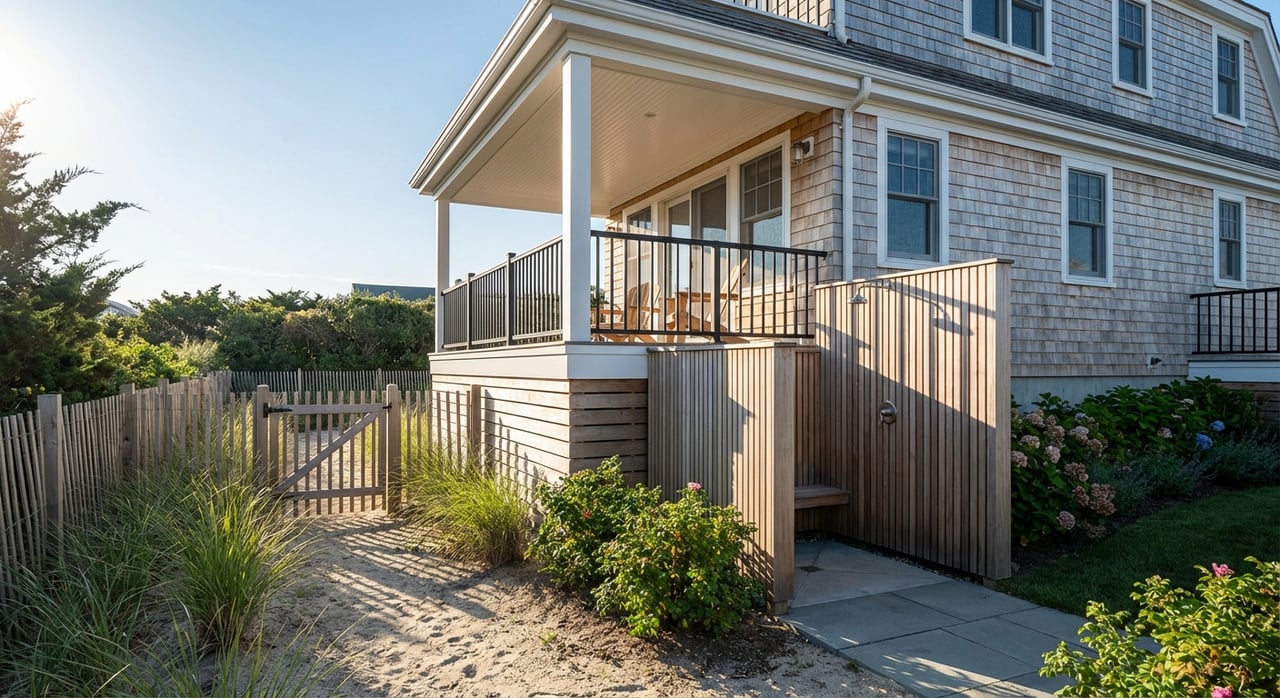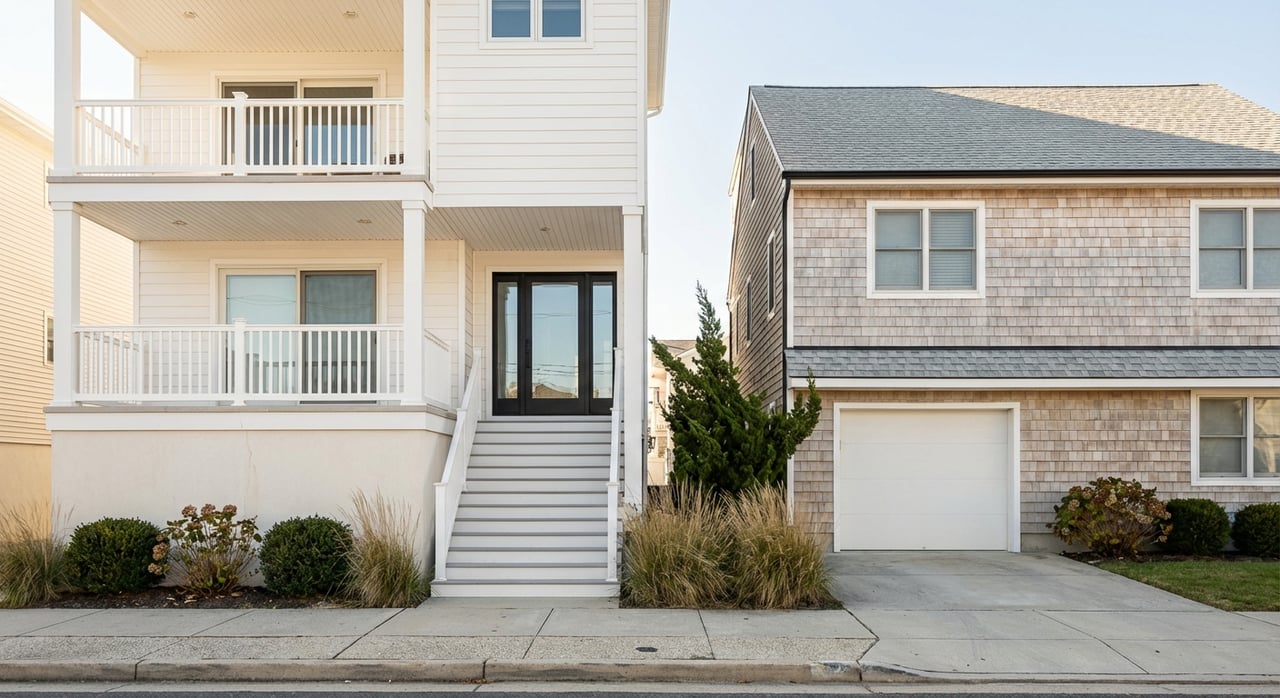
You want a Brigantine beach place that fits your life without surprise costs or red tape. The big question is whether a condo or a single-family home will serve you better on this barrier island. Both can be smart choices, but each comes with different rules, risks, and long-term costs. In this guide, you will compare lifestyle, maintenance, financing, rentals, and insurance in Brigantine, then use a simple checklist to choose with confidence. Let’s dive in.
Start with your goals
Before you look at listings, get clear on how you plan to use the home. Will you visit on summer weekends and want turnkey ease, or live there year-round? Do you want to rent it part-time, or keep it only for family? Your answers will guide whether a condo’s low maintenance or a single-family home’s privacy and control is the better fit.
Condos in Brigantine: what to expect
Maintenance and assessments
With a condo, the association typically covers the building envelope, roof, common areas, landscaping, elevator, and amenities. You pay monthly dues that fund operations and reserves. When reserves are low, boards can levy special assessments. Review the association’s reserve study, budget, and recent meeting minutes to understand future cost exposure. The Community Associations Institute explains why reserve studies matter and how they should be funded, which is a helpful reference when you review documents. You can use this reserve study guidance as a framework.
Amenities and lifestyle
Many Brigantine condo communities offer pools, tennis or pickleball courts, and on-site laundry. That setup reduces day-to-day upkeep, which is ideal if you are a part-time owner. Shared living comes with rules, limited private outdoor space, and potential noise. Read the rules, rental policies, and any pet or parking limits to be sure the lifestyle fits you.
Financing and project approval
Condo loans depend on your occupancy type and the project itself. Some lenders require the condominium project to meet FHA or agency guidelines, or to be on approved lists. If a project is not approved, a single-unit approval or a different loan program may be needed. That can impact your timeline and rate. Learn how FHA approvals work and what lenders look for with this FHA condo approval overview.
Rentals and local licensing
If you plan to rent short term, align HOA rules with city licensing early. Brigantine requires an annual short-term rental license and treats advertising without a license as operating without one. The code also states that short-term rentals in condominiums are allowed only if the association’s governing documents permit them. Know your occupancy limits, posting rules, and renewal schedule before you buy. Read the city’s STR ordinance for details on licensing, occupancy caps, and advertising rules in Brigantine’s municipal code.
Costs to watch
In Brigantine, condo HOA dues vary by building, unit size, and amenities. You will see dues that range from the low hundreds per month to several hundred per month. Also plan for property taxes, which in New Jersey are generally higher than many other states. Aggregators provide useful context on local trends, but always verify exact tax bills with the city. You can explore a summary view of Brigantine tax trends on Ownwell’s local snapshot. If you intend to host short-term stays, factor the municipal occupancy tax into your revenue model. Platform guides note Brigantine’s lodging tax and how collection works, which you can review in Vrbo’s tax help center.
Single-family homes: what to expect
Control and upkeep
A single-family home gives you more privacy, parking, and flexibility for outdoor space. You also take on full responsibility for maintenance, including roof, siding, decks, driveways, landscaping, and in some locations, seawalls or bulkheads. On a barrier island, wind, salt, and storms can increase wear and tear. The city’s flood guidance is a good place to understand typical coastal maintenance concerns in Brigantine. Start with the City of Brigantine flood information page.
Flood and wind insurance
Brigantine states that all properties are within FEMA-mapped flood hazard areas. That means flood insurance should be a top-of-list item on any single-family purchase. FEMA’s Risk Rating 2.0 calculates premiums using property-specific factors like elevation, distance to water, and replacement cost, so two nearby homes can have very different premiums. Get both NFIP and private-market quotes for the exact address, ideally with an elevation certificate. Learn how Risk Rating 2.0 changes pricing in FEMA’s explainer referenced here: Risk Rating 2.0 summary. For elevation certificates and flood-zone questions, contact the city via the Brigantine flood information page.
Rentals and city rules
Brigantine permits short-term rentals in single-family homes, subject to licensing and operating rules. Owners must obtain an annual license before advertising, follow occupancy and posting rules, and remain current on taxes and utilities. Expect active enforcement and community attention to compliance. Confirm requirements in the municipal STR ordinance.
Long-term coastal risk
Sea-level rise and the frequency of coastal flooding are long-term planning considerations. NOAA’s Sea Level Rise Viewer helps you visualize potential inundation in New Jersey shore communities over time. Use it to inform your holding period, insurance planning, and future elevation or mitigation choices. Explore the NOAA Sea Level Rise Viewer.
Compare total cost of ownership
To make an apples-to-apples decision, map your monthly and annual costs for each property type. Focus on the following line items.
- Mortgage principal and interest, which will differ by down payment and occupancy type.
- Property taxes, verified with the city tax office for address-specific estimates.
- Insurance: homeowners, wind, and flood. Obtain quotes for the exact property and elevation.
- HOA dues for condos, plus any known special assessments or upcoming projects.
- Maintenance reserve for single-family homes, including roof, exterior, decks, and coastal wear.
- Utilities and seasonal services such as landscaping or snow removal.
- Short-term rental license fees, inspection costs, and advertising requirements if you plan to rent.
- Lodging and occupancy taxes for short-term stays, which affect net revenue.
Financing basics to clarify early
Lenders treat primary residences, second homes, and investment properties differently. If you plan to rent often or year-round, your lender may classify the purchase as an investment property, which can change the required down payment, debt-to-income thresholds, and interest rate. Ask lenders how they will classify the property and what documentation they need. This guide to second-home vs investment loans outlines the differences. For condos, also verify whether the project is eligible for your loan type or if a single-unit approval is required. Review the basics in this FHA condo approval overview.
Which fits you best?
- Choose a condo if you want a lock-and-leave second home, prefer amenities like a pool or courts, and are comfortable with association rules. Review HOA finances to avoid surprise assessments and confirm whether short-term rentals are allowed if that is part of your plan.
- Choose a single-family home if you value privacy, parking, and the freedom to modify your exterior space. Budget for variable maintenance and obtain flood and wind insurance quotes early, including elevation details.
- If you plan to short-term rent, line up both HOA permissions and city licensing. You will need to publish your license number in ads and respect occupancy and age-of-primary-occupant rules. The city’s ordinance explains these requirements clearly in the Brigantine STR code.
Questions to ask before you choose a condo or single-family home in Brigantine
Gather these documents and answers before you write an offer.
- HOA and condo documents: master deed, bylaws, rules and regulations, most recent annual budget, last audit, meeting minutes for the last 12 months, proof of insurance for the master policy, and the latest reserve study. Ask about rental restrictions, minimum rental periods, owner-occupancy requirements, any pending litigation, and whether special assessments are planned or recently levied. Use CAI’s reserve guidance to frame your review.
- Short-term rental status: whether the association permits short-term rentals, whether the specific unit or home has held a valid Brigantine STR license, the current license fee schedule, inspection requirements, and how to post the license number in advertisements. Confirm steps and limits using the Brigantine STR ordinance.
- Elevation and flood history: request the elevation certificate, any prior flood claims, and details on mitigation work like flood vents or elevation changes. The city keeps some elevation certificates on file. Contact the Construction Office or start with the city’s flood information.
- Condo financing eligibility: if you plan to use FHA, VA, or conventional conforming loans, ask whether the condo project is approved or if single-unit approvals are possible. See this FHA overview for context.
- Capital projects and repairs: ask about roofs, siding, elevators, seawalls, bulkheads, and decks. Clarify how recent work was funded and whether additional projects are scheduled. CAI’s reserve guidance can help you evaluate reserve sufficiency.
- Local licensing and taxes: confirm the STR license process and renewal timing, and whether booking platforms collect and remit Brigantine’s municipal occupancy tax. Review platform guidance on lodging taxes in Vrbo’s help center.
Suggested professionals to involve before you decide:
- A local real estate agent with Brigantine experience who can supply current comps and connect you with HOA contacts.
- A lender who will preapprove you with the correct occupancy type and confirm condo project eligibility.
- An insurance agent who will quote NFIP and private flood coverage and explain how Risk Rating 2.0 affects your specific address.
- An HOA attorney for document review and a municipal-code or land-use attorney if you plan significant changes or STR activity.
- An engineer or surveyor for elevation certificates, foundation or seawall inspections, and elevation-cost estimates.
Step-by-step next moves
- Clarify how you will use the property. Decide if this is a second home, an investment, or a primary residence. Share that plan with your lender so they can price and structure your loan correctly. See this primer on occupancy types to prepare questions.
- Get insurance quotes before you offer. Ask for NFIP and private flood quotes for the address, and request or order an elevation certificate. Start with the Brigantine flood resource page.
- If considering a condo, collect the full HOA packet and study reserves, rules, and any history of assessments. Use CAI’s reserve study guidance as your review checklist.
- If you plan to rent short term, confirm you can meet both the HOA’s rules and the city’s licensing conditions. Read the STR ordinance to understand occupancy caps, advertising rules, and fees.
- Build a total cost of ownership model for your top two or three properties. Include mortgage, taxes, insurance, HOA dues or maintenance reserves, utilities, STR license fees, and occupancy taxes.
- Walk the area in season and off-season if possible. Brigantine has a large seasonal housing share, so neighborhood energy and services can vary across the year.
When you are ready to compare options side by side, we are here to help you analyze HOA documents, STR rules, and flood and insurance details so your decision is clear and confident. Schedule a conversation with Mazzulo Real Estate LLC and we will map the best path to your Brigantine home.
FAQs
How do Brigantine short-term rental rules affect condos vs single-family homes?
- Brigantine allows short-term rentals in single-family homes and in condos only if the condo association’s documents permit them; in all cases, you must secure a city STR license before advertising, follow occupancy and posting rules, and renew annually as outlined in the municipal code.
Do all Brigantine homes need flood insurance?
- The city states all properties are within FEMA-mapped flood hazard areas, so flood insurance and an elevation certificate are essential due diligence items; start with the city’s flood information.
What is FEMA Risk Rating 2.0 and why does it matter in Brigantine?
- Risk Rating 2.0 sets flood premiums using property-specific factors like elevation and distance to water, so two nearby addresses can see very different costs; review FEMA’s overview here: Risk Rating 2.0 summary.
Can I use FHA financing to buy a Brigantine condo?
- Possibly, but the condo project must meet FHA or agency guidelines, or you may need a single-unit approval; ask your lender early and review this FHA condo approval overview.
How do HOA fees compare to single-family maintenance at the shore?
- Condo dues bundle building and amenity costs into a predictable monthly fee, though special assessments can occur; single-family owners avoid HOA dues but should budget a maintenance reserve for coastal wear, plus wind and flood insurance as explained on the city’s flood page.